
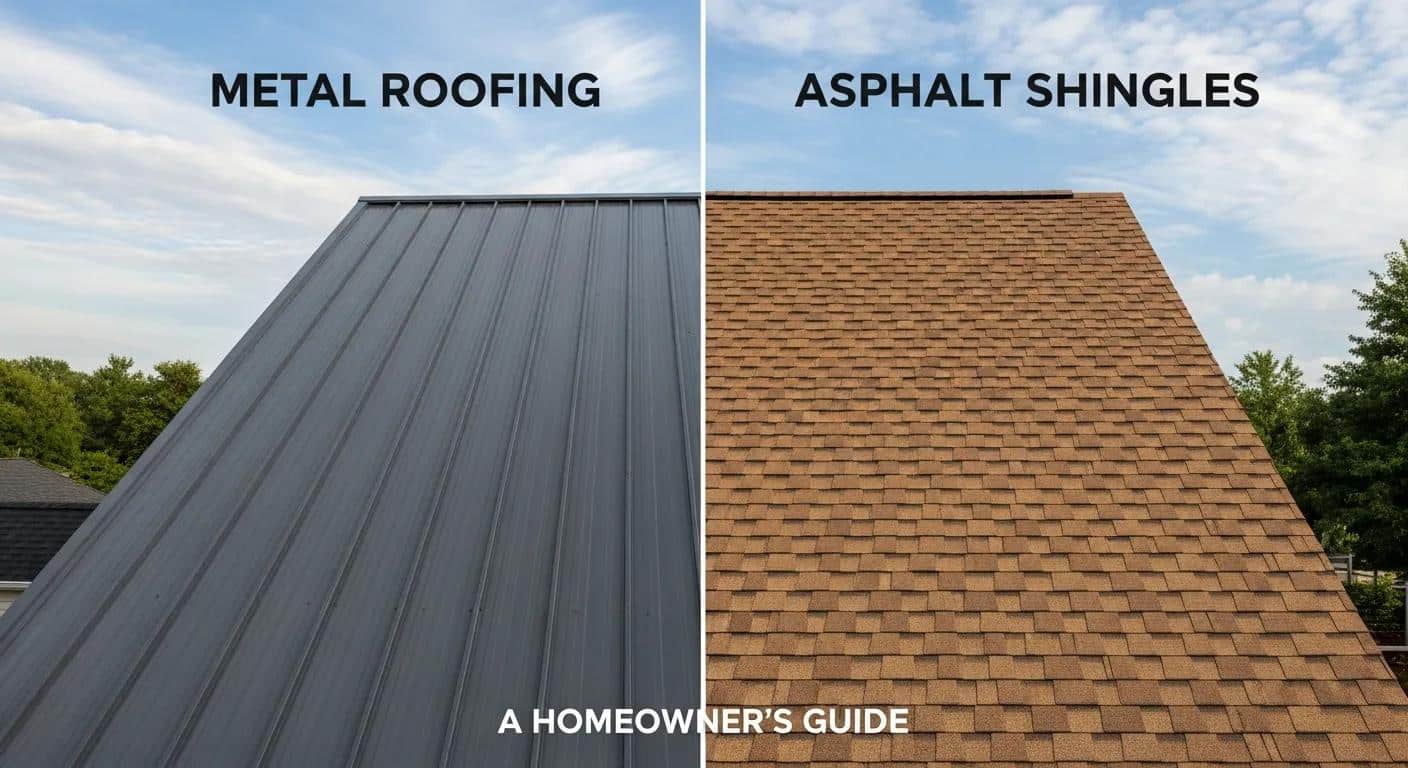
When it comes to choosing the right roofing material for your home, the decision between metal roofing and asphalt shingles can be daunting. Each option presents unique advantages and challenges that can significantly impact your home’s value, energy efficiency, and long-term maintenance costs. This article provides a comprehensive comparison of metal roofing and asphalt shingles, focusing on cost, durability, and installation processes specifically for homeowners in Central Iowa. By understanding the differences between these two popular roofing materials, including steel roof vs shingles and metal shingles vs asphalt shingles, you can make an informed decision that best suits your needs and budget.
In this article, we explore the cost differences, durability and lifespan of each material, energy efficiency and environmental benefits, as well as installation and maintenance requirements. Additionally, we highlight why Done Right Roofing and Exteriors is a trusted choice for roofing replacement in Central Iowa, offering quality workmanship and local expertise.
Metal Roofing vs Asphalt Shingles: In-Depth Cost Comparison
Cost is a significant factor when choosing between metal roofing and asphalt shingles. Homeowners must consider not only the initial installation costs but also the long-term financial implications of each roofing option, including the metal vs asphalt roof cost and steel roof vs shingles cost.
How does metal roofing cost compare to asphalt shingles in Central Iowa?
In Central Iowa, the average cost of metal roofing typically ranges from $6 to $12 per square foot, while asphalt shingles generally cost between $3 to $5 per square foot. This comparison of metal vs asphalt roof cost and cost of metal shingles vs asphalt shingles shows that although the upfront investment for metal roofing is higher, it is essential to consider the long-term savings associated with its durability and energy efficiency. For those wondering, is a tin roof cheaper than shingles? the answer depends on the specific materials and installation, but generally metal roofs have a higher initial cost than asphalt shingles.
What factors influence the overall roofing installation expenses?
Several factors can influence the total installation costs for both metal roofing and asphalt shingles, including:
- Material Costs: The type of roofing material selected directly impacts the overall price, whether you choose metal shingles vs asphalt shingles or traditional asphalt shingles.
- Labor Costs: Skilled labor is required for proper installation, which can vary based on local market rates.
- Permitting and Inspection Fees: Local regulations may require permits and inspections, adding to the overall cost.
- Roof Complexity: Roof design, pitch, and accessibility can affect labor time and material waste, influencing total costs.
- Warranty and Quality: Higher-quality materials and extended warranties may increase upfront costs but provide better long-term value.
Understanding these factors can help homeowners budget effectively for their roofing projects and avoid unexpected expenses.
How do metal roofing and asphalt shingles differ in durability and lifespan?
Durability and lifespan are critical considerations when selecting roofing materials. Metal roofing is known for its longevity and resilience, while asphalt shingles have a shorter lifespan and may require more frequent replacements. This metal vs asphalt roof comparison highlights the benefits of metal roofing in terms of durability.
What is the expected lifespan of metal roofing versus asphalt shingles?
Metal roofing can last 40 to 70 years, depending on the material and maintenance, while asphalt shingles typically last 15 to 25 years. This significant difference in lifespan can influence long-term costs and the frequency of roof replacements.
Understanding the long-term financial implications, including life cycle costs, is crucial when evaluating asphalt shingles.
Asphalt Shingle Life Cycle Cost Analysis
The life cycle cost (LCC) analysis of asphalt shingles and clay tiles was conducted in a similar manner as the LCA using the same BEES model. LCC is performed to estimate the overall
Environmental and economic performance of asphalt shingle and clay tile roofing sheets using life cycle assessment approach and TOPSIS, S Sackey, 2018
How does Central Iowa’s climate impact the durability of each roofing material?
Central Iowa experiences a range of weather conditions, including heavy snowfall, rain, and temperature fluctuations. Metal roofing is particularly well-suited for this climate due to its resistance to extreme weather, while asphalt shingles may be more susceptible to damage from ice and snow accumulation. Metal roofs also shed snow more effectively, reducing the risk of ice dams and water infiltration. Homeowners should consider these factors when selecting roofing materials to ensure optimal performance and longevity.
Local Market Insights and Case Studies
Recent data from Central Iowa’s roofing market indicates a growing preference for metal roofing, especially in areas prone to severe winter weather. A case study of a residential neighborhood in Des Moines showed that homes with metal roofs experienced 30% fewer maintenance calls related to weather damage over a five-year period compared to those with asphalt shingles. Additionally, local contractors report that metal roofing installations have increased by approximately 15% annually over the past three years, reflecting homeowner confidence in the material’s durability and energy efficiency.
Another case study from a rural property near Ames demonstrated that switching from asphalt shingles to metal roofing reduced the homeowner’s annual energy costs by nearly 12%, attributed to metal’s superior reflective properties and insulation benefits. These local insights underscore the practical advantages of metal roofing in Central Iowa’s climate and market.
Which roofing option offers better energy efficiency and environmental benefits?
Energy efficiency and environmental impact are increasingly important factors for homeowners. Metal roofing is often touted for its energy-saving properties, while asphalt shingles have different environmental considerations.
How energy efficient is metal roofing compared to asphalt shingles?
Metal roofing is highly energy efficient, reflecting solar heat and reducing cooling costs in the summer. In contrast, asphalt shingles tend to absorb heat, which can lead to higher energy bills. Homeowners looking to improve their energy efficiency may find metal roofing to be a more sustainable choice.
Further research supports the notion that metal roofing offers significant advantages in terms of energy efficiency and durability.
Energy-Efficient & Durable Metal Roofing Systems
Metal substrate manufacturers and affiliates are keenly interested in documenting whether metal roofing can be marketed as energy-efficient, durable and sustainable roof systems with
Painted metal roofs are energy-efficient, durable and sustainable, WA Miller, 2004
What environmental impacts should homeowners consider for each roofing type?
When evaluating the environmental impact of roofing materials, homeowners should consider:
- Sustainability of Materials: Metal roofing is often made from recycled materials and is fully recyclable at the end of its life.
- Recyclability: Asphalt shingles can be recycled, but the process is less common and more complex than metal recycling.
- Impact on Local Ecosystems: The production and disposal of roofing materials can affect local ecosystems, making it essential to choose environmentally friendly options.
- Energy Consumption in Manufacturing: Metal roofing generally requires less energy to produce over its lifespan compared to asphalt shingles, contributing to a lower carbon footprint.
What are the installation and maintenance requirements for metal roofing and asphalt shingles?
Understanding the installation and maintenance needs of each roofing type is crucial for homeowners planning a roofing project, especially when comparing metal vs shingles installation and upkeep.
How does the metal roofing installation process differ from asphalt shingles?
The installation process for metal roofing typically involves:
- Preparation: Ensuring the roof deck is clean and free of debris.
- Underlayment: Installing a protective underlayment to prevent moisture infiltration.
- Panel Installation: Securing metal panels with fasteners, ensuring proper alignment and overlap.
- Sealing and Flashing: Proper sealing around vents, chimneys, and edges to prevent leaks.
In contrast, asphalt shingles are installed by layering shingles in a staggered pattern, which may require additional steps for sealing and waterproofing.
What are the typical maintenance needs and costs for each roofing material?
Both roofing types require maintenance, but the frequency and costs can differ:
- Metal Roofing: Requires periodic inspections and cleaning to prevent rust and ensure longevity. Maintenance costs are generally lower due to its durability and resistance to weather damage.
- Asphalt Shingles: May require more frequent repairs and replacements, especially after severe weather events, leading to higher long-term maintenance costs. Regular inspections for cracked or missing shingles are necessary.
Why choose Done Right Roofing and Exteriors for your roofing replacement in Central Iowa?
When it comes to roofing replacement, selecting a reliable contractor is essential. Done Right Roofing and Exteriors stands out for its commitment to quality and customer satisfaction.
What free estimate and service options does Done Right Roofing offer?
Done Right Roofing and Exteriors provides free estimates for roofing projects, allowing homeowners to understand their options and costs upfront. Their team of experts is dedicated to helping clients choose the best roofing solution for their needs, whether considering metal asphalt shingles or traditional asphalt shingles.
Conclusion
Choosing between metal roofing and asphalt shingles involves weighing key benefits such as durability, energy efficiency, and long-term cost savings. Understanding these factors, including steel roof vs shingles cost and metal vs shingles comparisons, empowers homeowners to make informed decisions that enhance their property’s value and performance. Incorporating local market data and case studies provides additional insight into how these roofing options perform in Central Iowa’s unique climate and market conditions. For personalized guidance and a free estimate, consider reaching out to Done Right Roofing and Exteriors today. Explore your options and invest in a roofing solution that meets your needs and budget.
Contact Information
Done Right Roofing and Exteriors
3000 Scott Ave, Des Moines, IA 50317
Phone: (515) 420-1816
Email: newroofiowa@gmail.com
Opening Hours: 7am – 7pm